
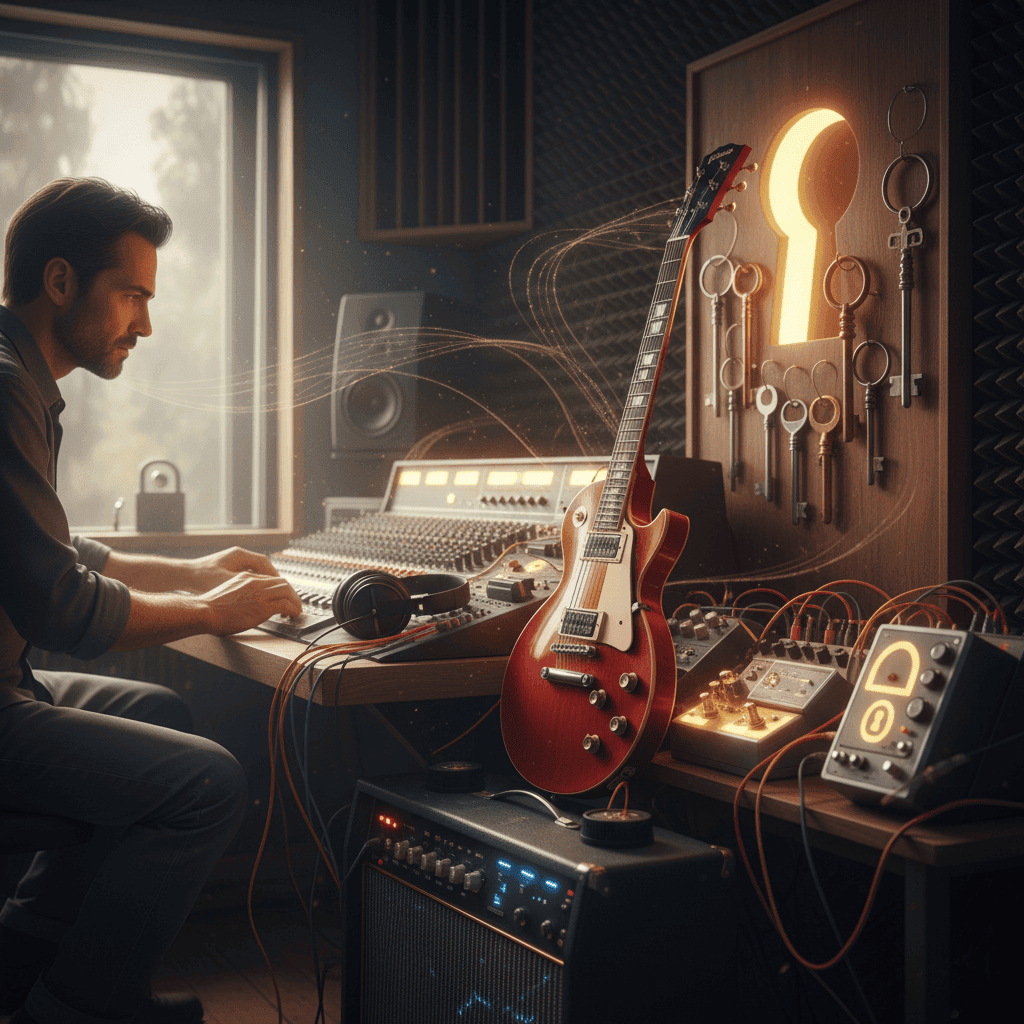
Getting a professional guitar sound is about more than gear shopping. It starts with knowing which elements shape tone and how they interact. Whether you play at home, gigs, or in the studio, small adjustments
Getting a professional guitar sound is about more than gear shopping. It starts with knowing which elements shape tone and how they interact. Whether you play at home, gigs, or in the studio, small adjustments produce big changes when they are applied with intention.
This article lays out practical steps and real world tips that you can use right away. Expect clear guidance on instruments, amps, pedals, recording technique, and practice routines that lead to consistent, polished results.
Core elements that define professional guitar sound
Think of tone as a mix of source, path, and space. The source is your guitar and how you play. The path covers pickups, cables, pedals, and amplifier settings. The space is where sound is captured or perceived, including room acoustics and mic placement. Paying attention to each part yields a cohesive result instead of chasing a single trick.
- Source Pay attention to string age, pick type, and technique. Fresh strings and a calm attack can tighten low end and produce clearer highs.
- Path Keep connections clean. A noisy cable or poor solder joint will mask careful tonal choices.
- Space Record in a room with controlled reflections or use close mic placement to reduce room coloration when needed.
Guitar selection and pickup choices that shape tone
Every guitar has a voice. Single coil pickups deliver clarity and note definition. Humbuckers offer thicker midrange and more sustain. Active pickups increase output and compress the dynamic range, which can help certain styles. Choose a guitar that aligns with the core tones you want to produce rather than relying on external gear to change the instrument character completely.
Practical tip Consider pickup height and pole piece alignment. Small adjustments here can even out volume across strings and smooth tone without any extra gear.
Amp selection and dialing in settings for pro level sound
Amps are not only about power. Preamp character, power amp behavior, and speaker choice matter. Tube amps compress and saturate in musical ways as you push them. Solid state designs can be cleaner and more predictable. Modeling amps offer a vast palette but require careful selection to avoid thinness or overprocessing.
EQ approach for quick results
Start with all EQ controls at noon. Cut more than you add. For a full sound reduce the bass slightly to avoid muddiness, add a touch of mids for presence, and adjust treble to taste. If the guitar disappears in a mix, a small midrange bump often helps more than cranking volume.
Speaker and cabinet choices
Speakers color tone significantly. Celestion types tend to favor certain frequency bands. Larger speaker cabinets provide a sense of depth while smaller combos can deliver tight, focused response. Match your speaker size and cabinet to the music style and venue size for the best results.
Effects and pedal order that refine your tone
Pedal selection is less important than signal routing and gain staging. A simple chain often outperforms a complicated one when every device is set with intention. Consider the typical order: dynamic control, filters and wah, drive, modulation, delay, and reverb. This arrangement preserves clarity while allowing spatial effects to sit behind the guitar.
- Drive pedals Use them to shape preamp character or push an amp into natural breakup. Set gain to taste and use tone knobs to dial mids.
- Modulation Place after drive for choruses and flangers that track the distorted signal better.
- Time based effects Put delay and reverb last so repeats and reflections are affected by everything upstream.
Recording techniques that capture a professional sound
Capturing great guitar tone in the studio is both scientific and creative. Mic selection, mic placement, and the decision to record a direct signal in parallel are key choices. Use a dynamic mic for high SPL sources close to the cone and a small diaphragm condenser for detail at a slight distance.
Mic placement tips
Move the mic along the speaker cone to find sweet spots. Closer to the center yields more brightness and attack. Closer to the edge emphasizes lower frequencies. A distance of three to twelve inches captures some room while maintaining clarity. Blend a close mic with a room mic to taste for natural depth.
Direct injection and reamping
Record the DI signal along with the miked amp. This approach gives flexibility. If you later want a different amp character you can reamp the DI through another amp or use amp simulation in the box.
Practice and technique routines that build consistent tone
Professional tone is often the product of consistent habits. Spend time developing a dynamic sense that lets you control attack and sustain. Practicing with a metronome and varied picking dynamics trains your ears to hear how small changes affect tone.
- Fingered phrases versus pick attack produce different textures. Alternate between both when practicing a passage.
- Work on muting techniques to remove sympathetic noise, especially when using high gain.
- Record practice sessions so patterns in tone can be evaluated objectively.
Troubleshooting common tone problems
When tone problems arise, address them systematically. Start at the guitar and move downstream. Check tuning and intonation first. Then swap cables and test the amp without pedals. If noise persists, isolate each part until the source is identified. This approach saves time and money over changing gear blindly.
- If low end is flabby try rolling back the bass and switching to heavier gauge strings.
- If highs are harsh reduce treble and add a touch of midrange to smooth the profile.
- If attack is weak consider pickup height and pick choice before increasing gain.
Resources for deepening your tone knowledge
There are excellent tutorials, forums, and books that explain both the physics and musical applications of guitar tone. Reading focused reviews and watching comparison clips helps you learn how subtle changes translate to audible differences. For curated guides that highlight proven methods and practical references, discover more insights offers useful direction and links to further material.
Summary and next steps
Developing a professional guitar sound is a progressive process. Start by stabilizing the fundamentals guitar setup, pickup balance, and a clean signal path. Tune amp settings to complement the guitar and style, arrange pedals to preserve clarity, and use simple recording setups to capture the best version of your tone. Practice focused exercises that build dynamic control and consistency. When problems occur, troubleshoot methodically from source to output. Over time these habits produce reliable results that translate across rooms and sessions.
If you want immediate improvement choose one change and test it for a week. For example change string gauge and note the difference in response and sustain. Then try a small amp EQ adjustment and record the before and after. Small, repeated experiments teach faster than large one time overhauls. Share your results with peers or a teacher to accelerate learning. Take action today and refine one aspect of your setup this week to hear measurable progress in your tone.